Email Virus Icon: A Practical Asset for Cybersecurity Visual Communication
In the realm of digital design and cybersecurity education, visual shorthand is essential. The concept of an Email Virus represents one of the most persistent threats in the modern digital landscape, yet communicating this abstract danger effectively requires precise graphic representation. For professionals creating security awareness training, technical documentation, or web interfaces, a dedicated Email Virus icon serves as more than mere decoration; it is a functional communication tool. This specific asset from the cyber security collection offers a streamlined, simple line aesthetic that balances technical accuracy with broad visual accessibility, making it a valuable resource for designers and educators alike.
The Role of Visual Semantics in Cybersecurity
Understanding why an Email Virus icon is necessary begins with understanding user behavior. Phishing attacks and malicious attachments remain the primary vector for enterprise breaches. When users encounter warnings, tutorials, or interface elements related to email security, cognitive load must be minimized. A complex, hyper-realistic illustration of malware can sometimes obscure the message or appear too aggressive for professional environments. Conversely, a generic envelope icon fails to convey risk.
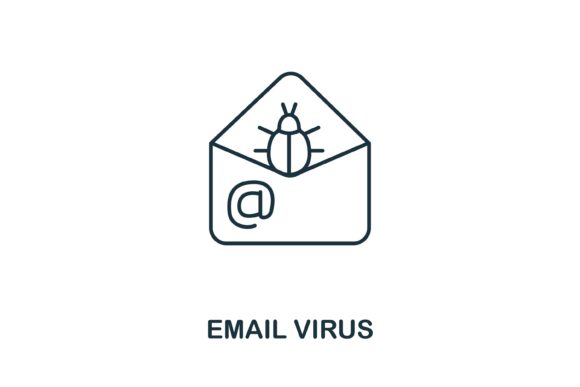
This simple line Email Virus icon bridges that gap. It utilizes established semiotic conventions—typically combining the recognizable silhouette of an envelope with symbols of contamination, bugs, or warning alerts—to create instant recognition. In practical application, this allows marketers and educators to signal "danger" or "caution" without inducing panic. The simplicity of the line art ensures that the symbol remains legible at small sizes, such as in mobile app notifications or dense infographic data points, while retaining enough detail to be distinct when scaled up for presentation slides or printed manuals.
Evaluating Technical Quality and File Formats
For freelancers and agency designers, the utility of a vector asset is defined by its technical flexibility. This package includes both EPS and JPG files, addressing two distinct workflow needs. The EPS (Encapsulated PostScript) file is the critical component for professional production. As a vector format, it allows for infinite scaling without pixelation, which is non-negotiable for responsive web design and large-format printing. More importantly, EPS files retain editable path data. This means a designer can adjust stroke weights to match a brand’s existing iconography set, change colors to align with corporate identity guidelines, or isolate specific elements of the virus symbol for custom compositions.
The inclusion of a high-resolution JPG file provides immediate utility for non-designers or rapid prototyping. Educators drafting a quick syllabus, bloggers writing a post on email hygiene, or small business owners creating an internal memo may not have access to Adobe Illustrator or Affinity Designer. The JPG serves as a plug-and-play solution that maintains visual clarity for standard digital use. However, professionals should note that while the JPG offers convenience, the EPS remains the master asset for any long-term or commercial project where consistency and editability are paramount.
Practical Applications Across Industries
The versatility of a simple line Email Virus icon extends across multiple sectors. Its neutral, clean aesthetic prevents it from looking dated or overly stylized, ensuring longevity in design systems.
- Corporate Training and Compliance: HR departments and compliance officers frequently update security modules. This icon works effectively as a bullet point marker in slide decks or as a header image for sections detailing phishing identification. Its professional tone avoids the cartoonish look that can undermine serious training material.
- SaaS and Web Interface Design: Developers building email clients, spam filters, or security dashboards need consistent iconography. A line-style virus icon integrates seamlessly with modern UI kits, providing clear status indicators for quarantined messages or threat detection alerts without disrupting the visual hierarchy of the interface.
- Content Marketing and Blogging: Cybersecurity writers and tech bloggers require featured images and in-content graphics to break up text. Using a standardized vector icon helps establish a cohesive visual language across a publication, reinforcing brand authority on technical topics.
- Infographic Creation: Data visualization relies on clear symbols. When illustrating statistics about email breach vectors or malware distribution, this icon acts as an efficient anchor point, allowing viewers to process quantitative data faster through associative imagery.
Design Consistency and Integration
One of the most common challenges in sourcing individual icons is maintaining stylistic consistency. A mismatched icon set can make a professional website or document look disjointed. This Email Virus icon is designed as part of a broader cyber security collection, which implies adherence to a unified grid, stroke width, and corner radius system. For designers expanding their asset library, this reduces friction. You can confidently pair this virus symbol with locks, shields, servers, or user profile icons from the same collection, knowing they will share the same visual DNA.
The "simple line" style is particularly advantageous for contemporary design trends. Flat design and minimalism dominate current web aesthetics because they prioritize content over ornamentation. Heavy gradients or 3D renders often clash with clean typography and whitespace. This vector asset respects negative space, ensuring that it complements rather than competes with surrounding text and layout elements. This restraint is a hallmark of mature design resources intended for professional use rather than novelty.
Considerations for Effective Implementation
While the asset is robust, its effectiveness depends on proper implementation. Users should consider context and audience when deploying the Email Virus icon. In highly technical environments, such as a SOC (Security Operations Center) dashboard, a simple line icon might need to be supplemented with more detailed metadata or color-coding to convey severity levels. The icon signals the category of threat, but not necessarily the specific nature of the payload.
Furthermore, accessibility must be prioritized. When using this icon in web templates or digital documents, always include appropriate alt text. Screen readers cannot interpret the visual metaphor of a virus inside an envelope; they rely on descriptive tags like "Warning: Email virus detected" or "Icon representing phishing threat." The visual asset enhances sighted user experience, but semantic HTML ensures inclusivity.
Color psychology also plays a role in how this icon is perceived. While the vector is editable, defaulting to red for danger is standard, it can sometimes trigger anxiety or be problematic for users with color vision deficiencies. Consider using shape-based distinctions alongside color, or utilizing high-contrast monochrome versions for universal accessibility. The ability to edit the EPS file makes these adjustments straightforward, allowing organizations to tailor the asset to their specific accessibility standards and brand safety guidelines.
Long-Term Value and Workflow Efficiency
For entrepreneurs and freelancers operating under tight deadlines, the value of this asset lies in time savings. Creating a custom, balanced, and semantically accurate virus icon from scratch can take hours of iteration. Licensing or downloading a pre-made, high-quality vector eliminates this bottleneck. The "easy to edit" nature of the file means that even junior designers or non-specialists can adapt the asset without risking quality degradation.
Moreover, investing in quality vector assets contributes to a sustainable design ecosystem. Unlike raster images that may need to be recreated as display resolutions increase, a well-constructed EPS file is future-proof. As screens move toward higher pixel densities and new form factors emerge, this Email Virus icon will remain crisp and relevant. This durability makes it a cost-effective choice for businesses looking to build lasting visual identities rather than chasing temporary trends.
Ultimately, this Email Virus icon succeeds because it treats cybersecurity visualization as a discipline of clarity rather than fear. It provides professionals with a reliable, adaptable, and aesthetically neutral tool for communicating complex risks. Whether used in a comprehensive annual security report, a minimalist app interface, or an educational blog post, it delivers exactly what is required: immediate recognition, professional polish, and technical flexibility. For those tasked with translating the invisible threats of the digital world into visible, understandable concepts, this asset represents a practical and enduring solution.